Assurance of Learning
From Competency Goals to the Accreditor's Table
Riti maps each program's competency goals across its courses. It then helps the faculty decide how each goal is measured and how student work is judged. The professors answer for their own courses, and the faculty decide.
Curriculum Map
Where Each Competency Is Taught and Assessed
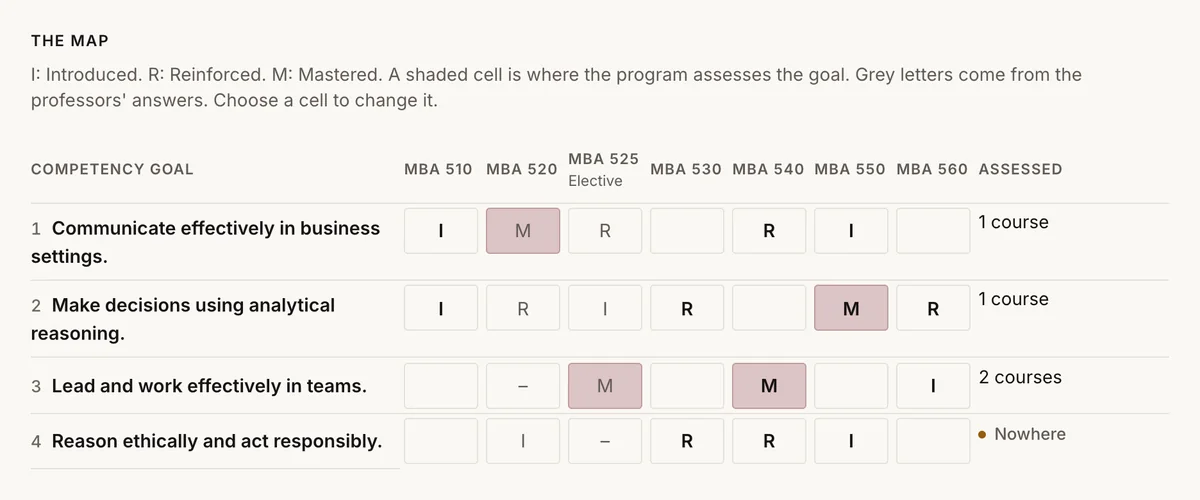
The map shows where each goal is taught and assessed across the program's courses. It flags any goal that is assessed nowhere.
-
Competency Goals
Read from a document the program already has, or typed in, with the learning objectives under each goal.
-
Gaps in View
The map flags a goal that is assessed nowhere, or only in an elective.
-
The Accreditor's Table
For an AACSB program, Table 5-1 fills in as each step is done. Any other program keeps the same plan and results under plain names.
-
Map Your Course
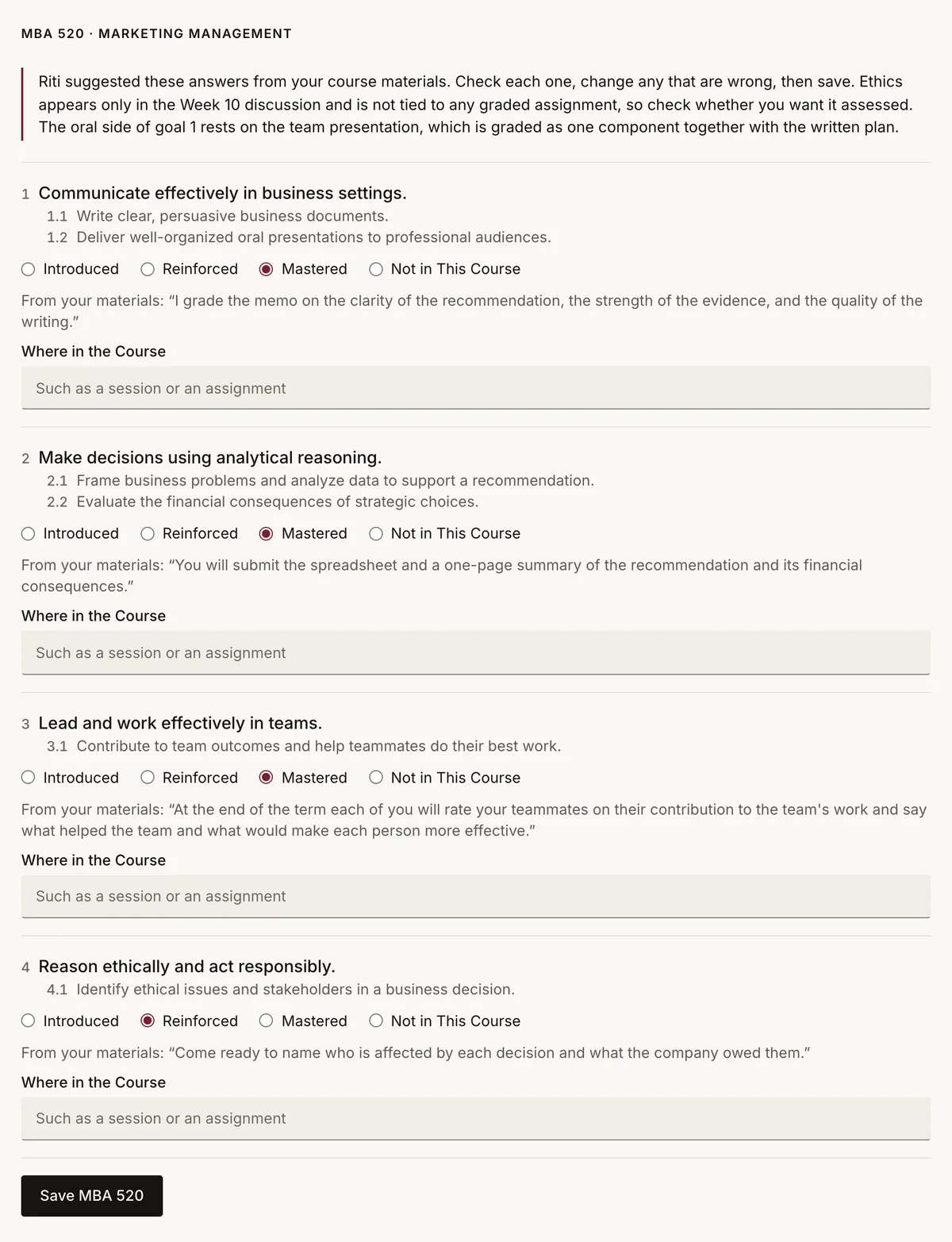
Each professor marks how far their course takes each goal: introduced, reinforced, or mastered.
-
Suggested From the Course
Riti reads the course's materials and suggests each answer, quoting the line behind it.
-
The Professor Decides
The suggestions are the professor's alone. Only what they save reaches the Program Office.
Measures
Ways to Assess Each Goal, Drawn From the Syllabus
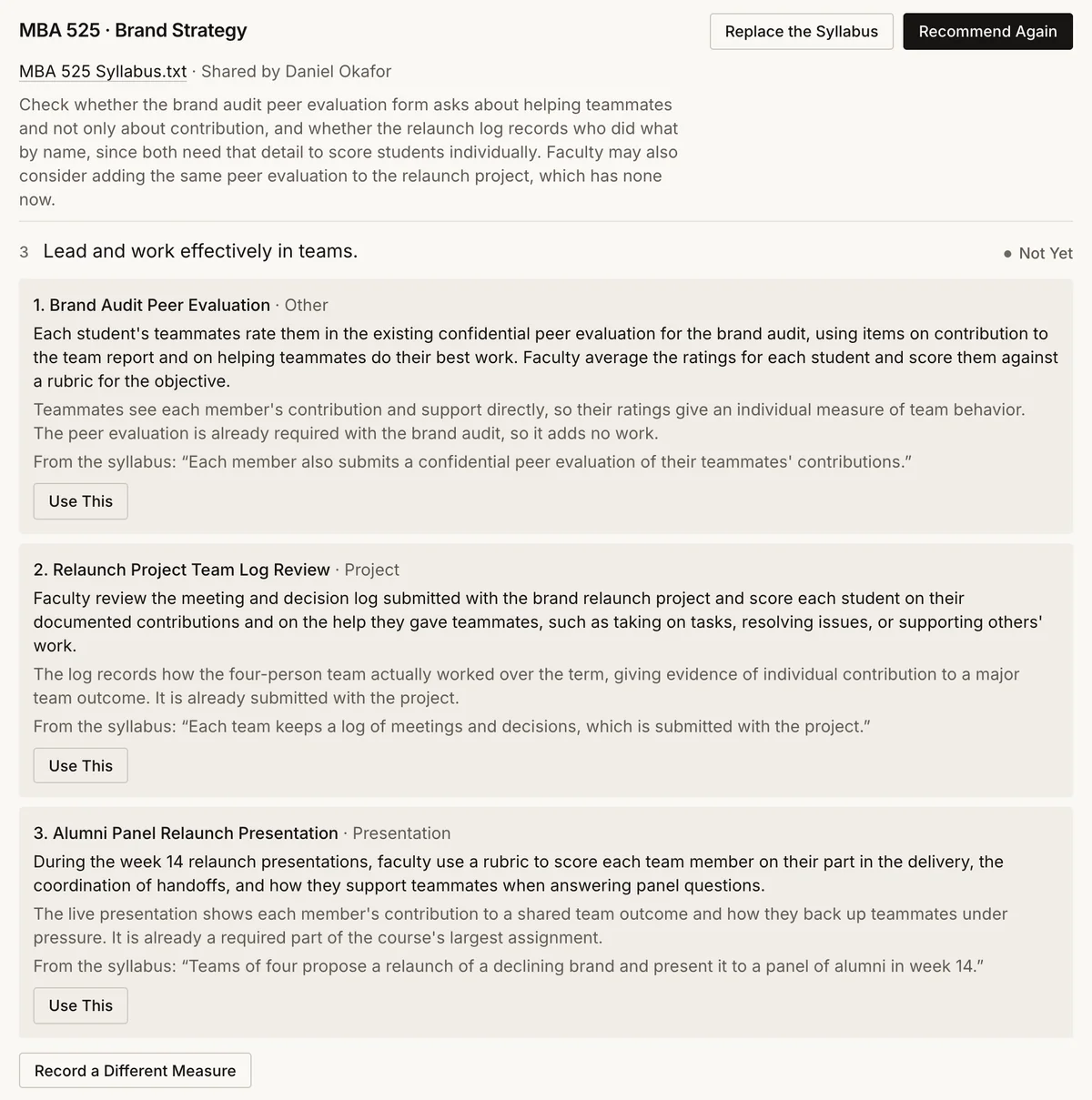
Each professor shares the syllabus of a course where the program assesses a goal. Riti proposes up to three ways to assess the goal there, and the faculty choose.
-
Share Your Syllabus
A professor uploads a syllabus or picks one from the course's materials. The Program Office can add one too.
-
Quoted From the Syllabus
Each proposal says what students do and why it measures the goal, with the line from the syllabus behind it.
-
Decided by the Faculty
The Program Office records the measure the faculty chose, its target, and who decided it. The proposals leave as one PDF for the faculty.
Rubrics
One Rubric for Each Goal, on the Program's Scale
A goal assessed by a direct measure is judged by one rubric. Its traits come from the goal's learning objectives.
-
The Program's Scale
Exceeds, Meets, and Does Not Meet, unless the program sets its own two to five levels. A target counts the students at Meets or above.
-
Recommended or Read
Riti recommends three complete rubrics for a goal, or reads the program's own rubric onto its scale.
-
Replaced, Never Edited
A decided rubric is replaced, never edited, so the record of each decision stays. The rubrics leave as one PDF.
